
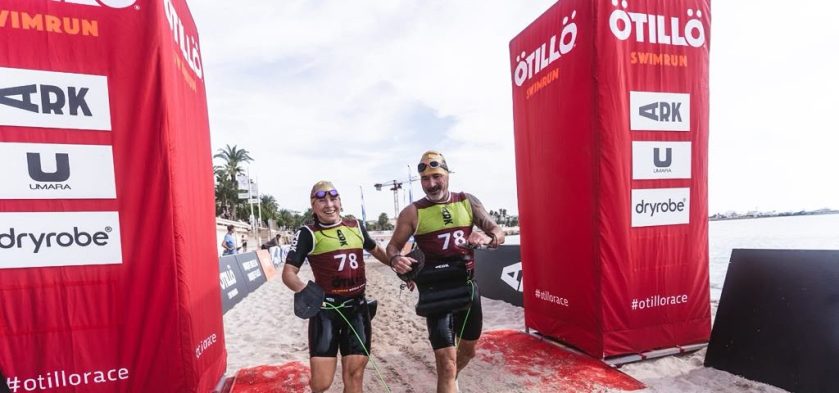
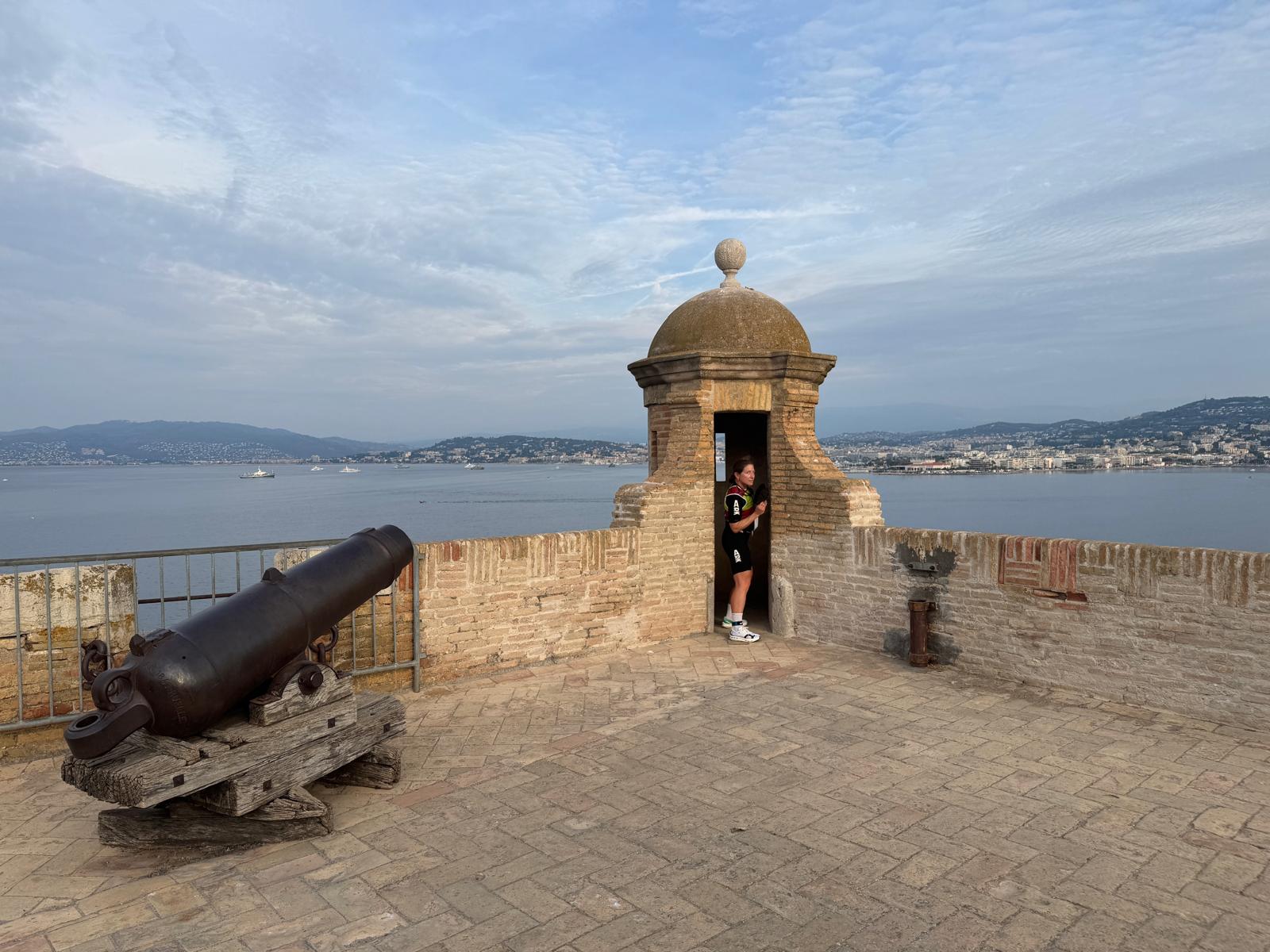
Standing inside Fort Royal on Sainte-Marguerite Island waiting for the start of ÖTILLÖ Cannes felt a little surreal. The fort was built in the 1600s, the Mediterranean stretched out beyond the walls, and it was about as cool a place as you could imagine to start a race.
It was also my first trip to France. Neither Jen Schnell nor I had ever raced Cannes, we didn’t know the course firsthand, and, to make things more interesting, we had never raced together.
A week earlier, that partnership did not even exist.
I had originally planned to race Cannes with Åsa Tengblad as part of my ÖTILLÖ Elite season. Cannes was the finale of the points series and worth double points, so it mattered. Jen, meanwhile, had been trying to find a partner and was coming up empty. Åsa had even been helping her search, and the week before the race she asked if Jen had found anyone yet. When the answer was still no, Åsa suggested that Jen and I race together so Jen could have the opportunity to collect as many points as possible. Åsa would drop down to the Solo Sprint instead.
How damn cool is that? That is the kind of thing that makes swimrun such a great sport. Åsa gave up the race we had planned together because she saw an opportunity to help another athlete. So, with less than a week to go, Jen and I suddenly had a partnership and a race in France to figure out.
Neither of us knew the Cannes course, so we did plenty of homework. We watched old race videos, studied maps, and used Google Street View anywhere we could to get a better feel for the terrain. The race begins on the Lérins Islands, a small group of Mediterranean islands just offshore from Cannes, before eventually making the long crossing back to the mainland. From everything we could find, there appeared to be a lot of pavement, packed gravel, beaches and urban running, with relatively little technical trail. That pushed both of us toward road shoes.
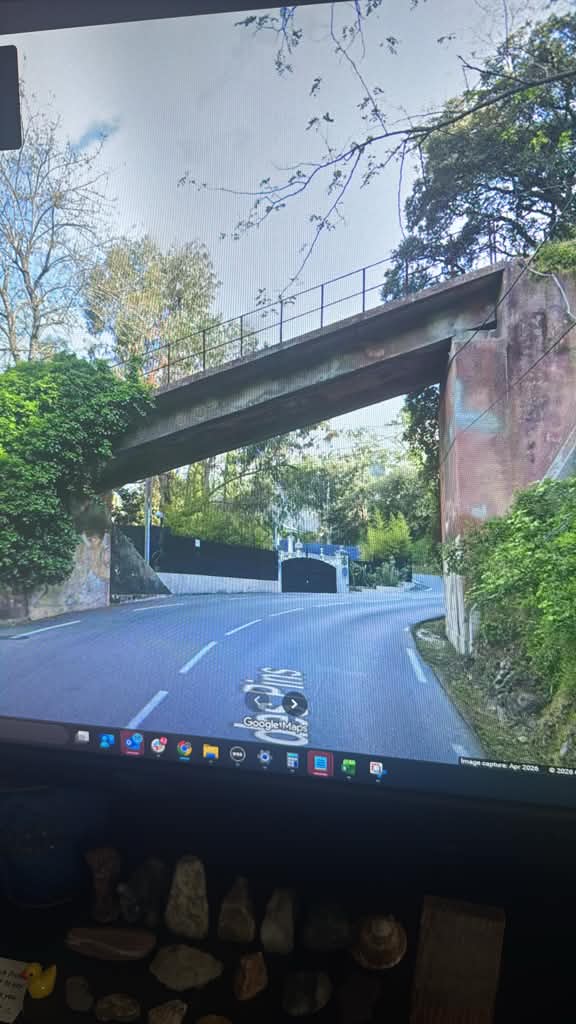
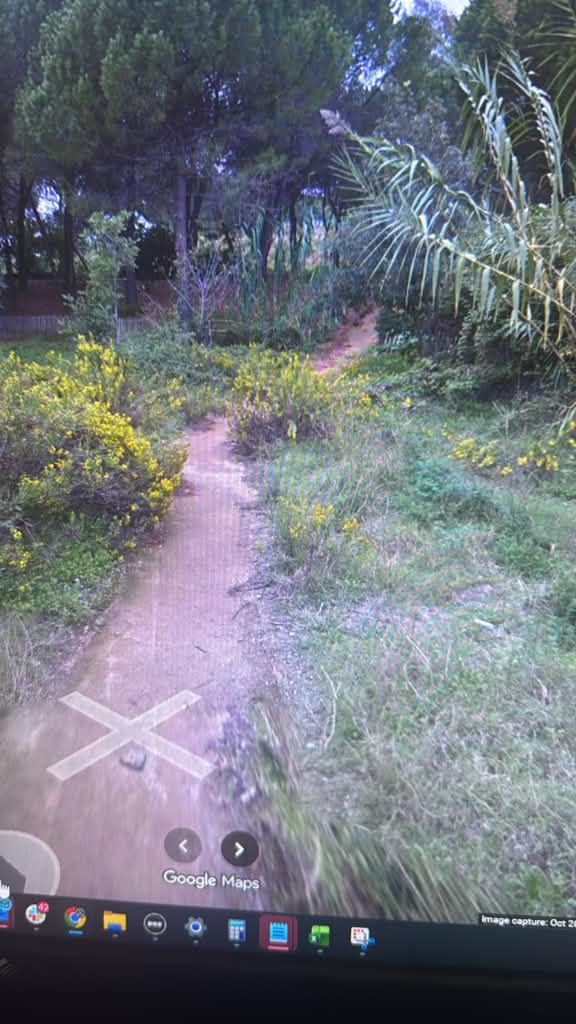
Our highly sophisticated course reconnaissance program.
I still managed to make that decision more complicated than necessary.
I have trained for well over a year in Saucony Endorphin Speeds, but the Endorphin Pro looked tempting for Cannes. It was lighter, had less material around the tongue and heel cup to hold water, and came with a carbon plate. So I bought a pair on the way to the airport, because clearly the smartest time to experiment with brand-new shoes is a few hours before flying to an important race.
I did not actually try them on until I got to Cannes.
They fit differently enough that I decided racing in brand-new shoes, on a course I had never seen, in a country I had never visited, with a partner I had never raced with, was probably enough new shit for one weekend. I went with the Speeds.
My trip itself was intentionally short. I left Atlanta Thursday night, arrived Friday afternoon, raced Saturday and flew home Sunday. That meant Jen and I had exactly one afternoon to figure out whether this new team actually worked.
As soon as I arrived, we headed out for a short swimrun over the final three swims and runs. We tested tether length, figured out who was comfortable leading, compared paces and talked through transitions, nutrition and race strategy. Fortunately, the important stuff clicked quickly. Our swimming and running paces were similar, Jen navigated extremely straight in the water, and neither of us felt like we were constantly adjusting for the other.
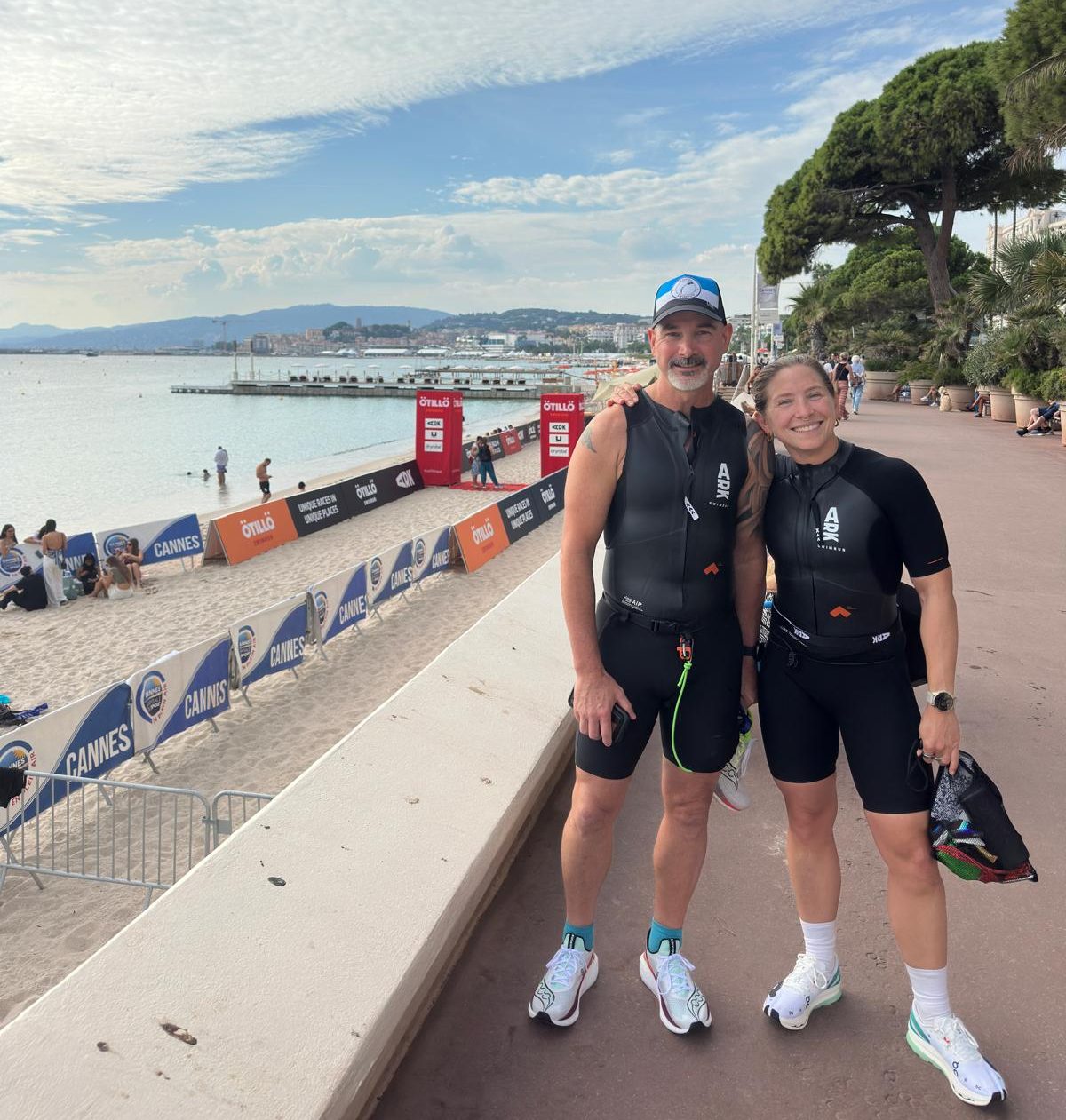
By Friday night, we had convinced ourselves that we had a plan.
Race morning promptly tested that theory.
The mixed wave started with the clap of the wooden ÖTILLÖ board, and Jen and I took off having agreed very clearly that we would not go out too hard. The problem was that it felt good. We still had several of the top mixed teams in sight and, while we knew we were moving quickly, neither of us thought too much about it in the moment. It wasn’t until later, looking back at the data, that we realized we had been running around 4:00 per kilometer, roughly 6:26 per mile.
We entered the first swim around fourth.
So much for the plan.
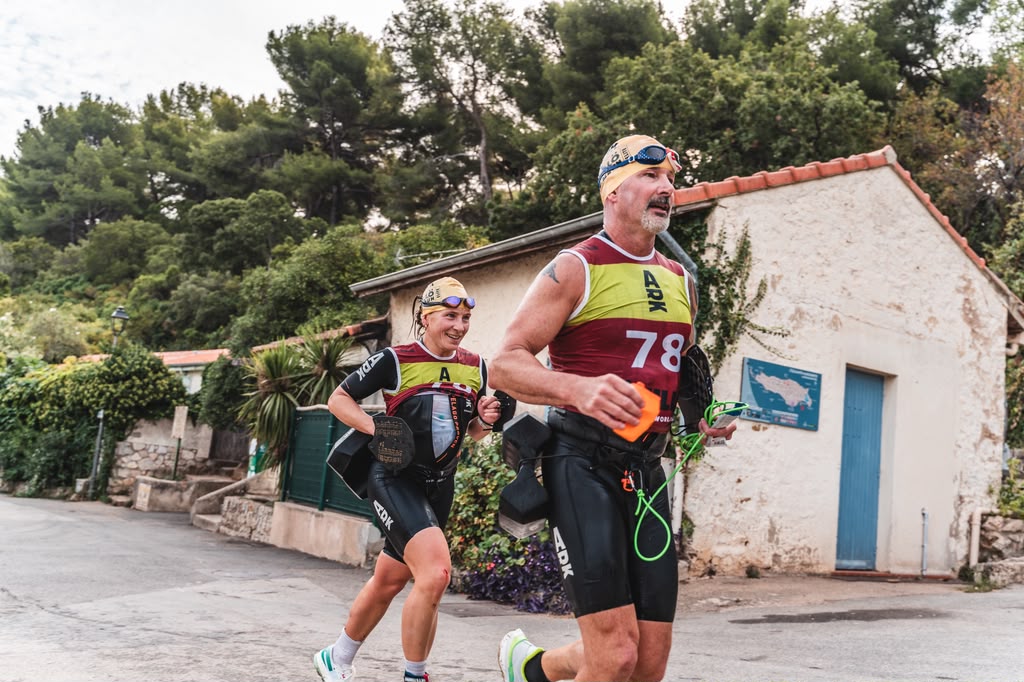
On the next run we actually discussed the need to calm down and settled into a much more responsible 4:30 per kilometer, or about 7:15 per mile, which was still too fast. Eventually we stopped being idiots and found a more sustainable rhythm around Saint-Honorat, the smaller of the two main Lérins Islands used by the race.
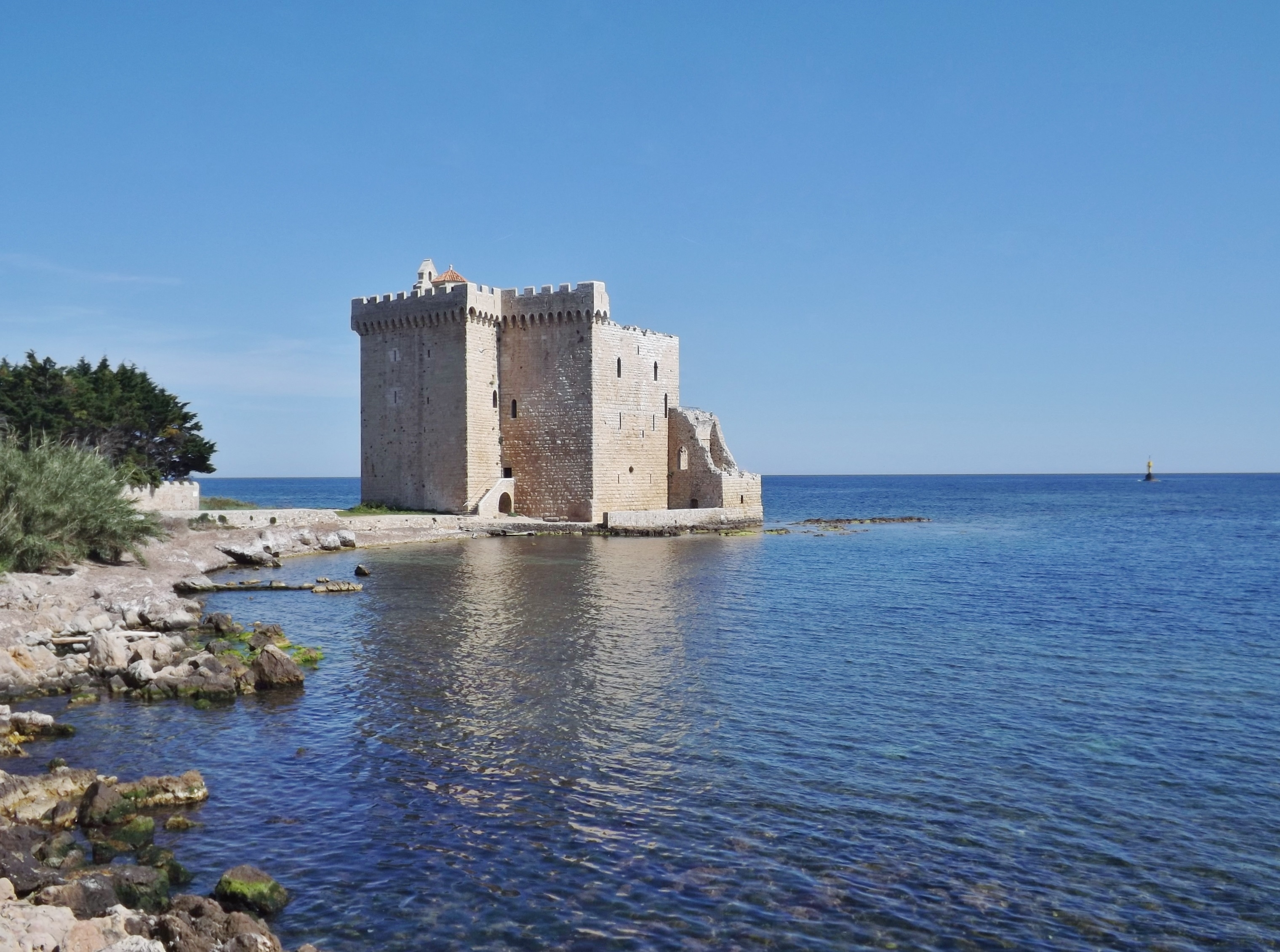
That gave us enough room to actually look around. Coming around the south side of the island, we saw the fortified monastery sitting beside the Mediterranean and both said “WOOOOW” at basically the same time. Sometimes sophisticated commentary is unnecessary.
The swim back toward Sainte-Marguerite was one we had been especially looking forward to because of the underwater sculptures submerged just off the island. Jen took the lead and I settled in behind her, but by then faster men’s teams were catching us while we were catching swimmers from earlier waves. The crossing turned into a mess of people swimming across us, over my legs and in just about every direction possible.
Somewhere below all of that were the statues.
We saw absolutely none of them.
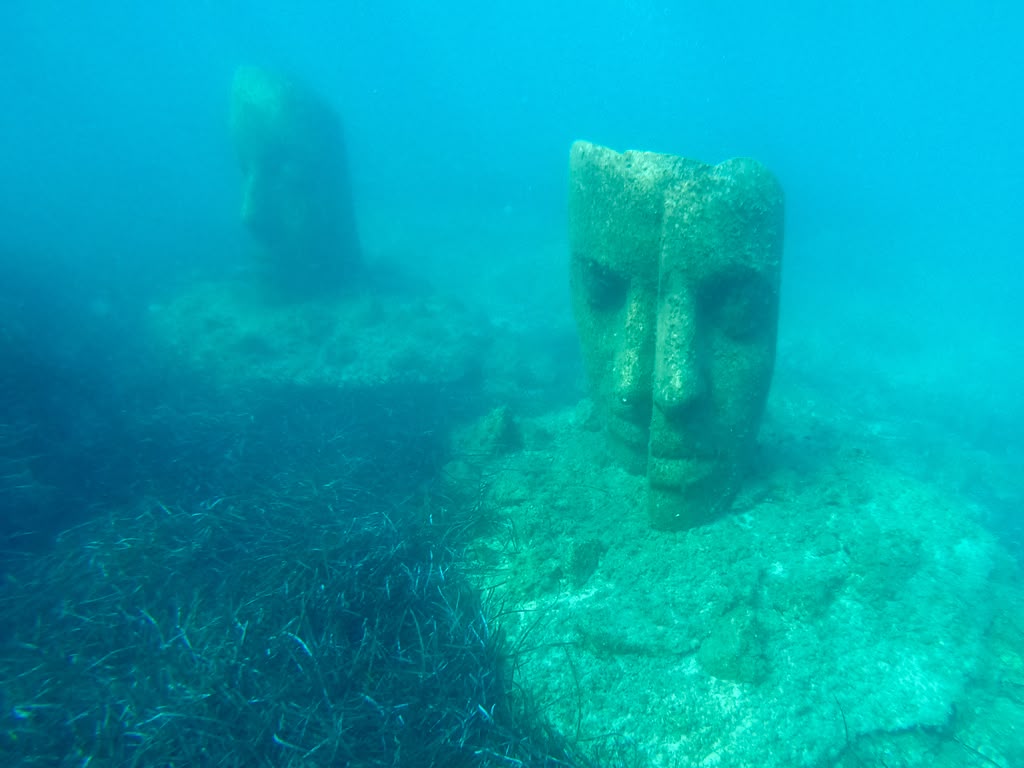
Fortunately, we weren’t leaving France without fixing that. The next day we swam back out specifically to see them, which was significantly easier when nobody was trying to swim over my legs and I wasn’t concerned with racing somebody to shore.
After another loop around Sainte-Marguerite, we reached the big swim back to mainland Cannes, roughly 1,400 meters, or about 0.87 mile. The forecast had suggested relatively calm water early in the race, but apparently the Mediterranean had not received the memo. The wind was already up and the water was getting rougher.
A volunteer told us to aim just to the right of a large red-roofed building, so that’s exactly what I did. About 250 meters later, a kayaker started yelling that we were too far right. By the time we finally spotted the actual exit flag, we had made a fairly significant detour and given up a few positions.
Neither of us knew where we were in the race anymore, so we stopped worrying about it and kept moving.
That was also when Cannes started showing off.
The islands had been beautiful and historic, but once we reached the mainland the race changed completely. We ran beside beaches and marinas and then straight into the city, weaving through markets, open-air restaurants and narrow streets while wearing wetsuits, goggles, paddles and a tether.
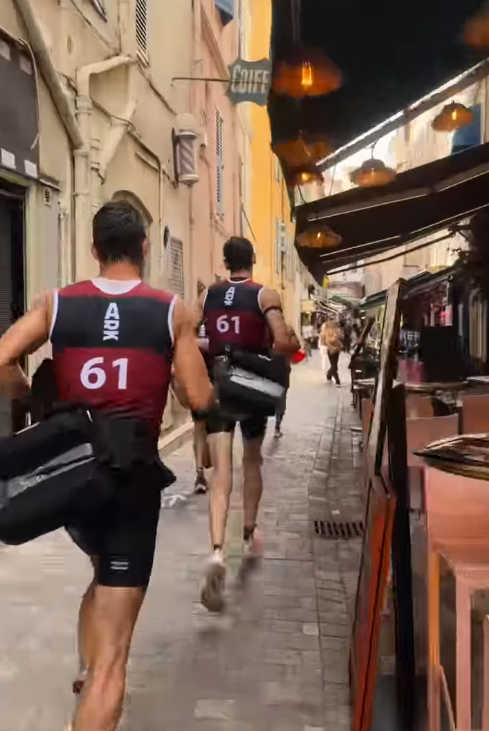
Some people looked at us like we were insane. Others cheered from restaurant tables over glasses of wine and beer.
It was fantastic.
At one point we started climbing a long series of old stone and cobblestone stairs just as the church bells began ringing the noon chimes.
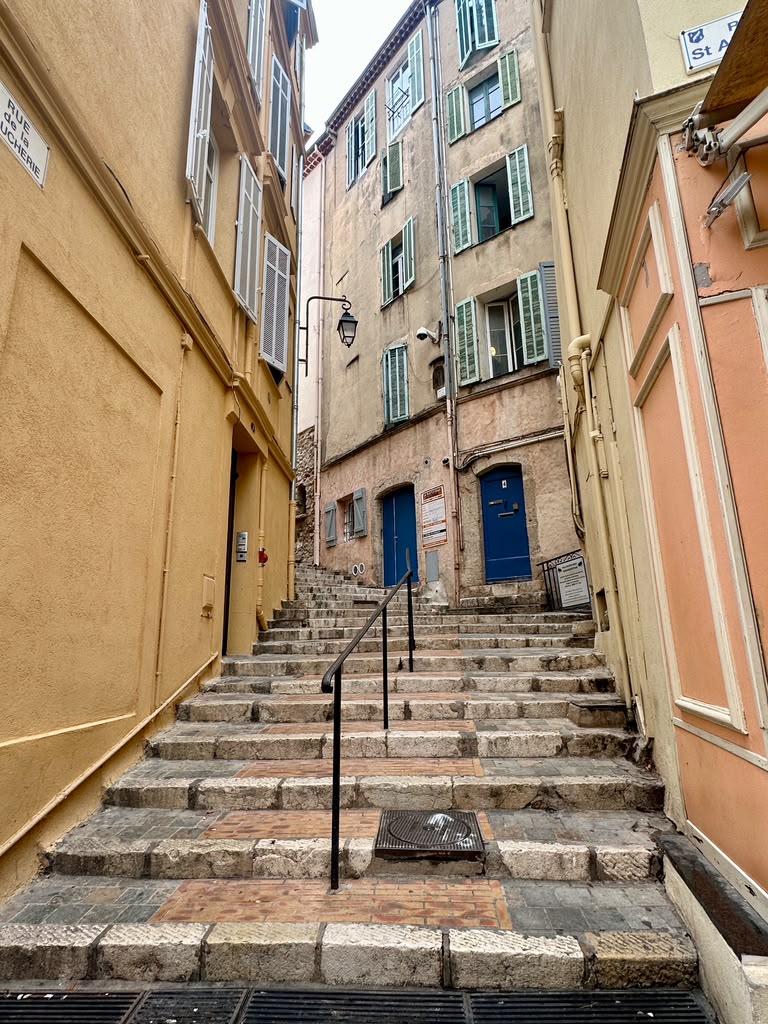
“How cool is that?” I asked.
“Ridiculously cool,” Jen answered.
That pretty much became the theme of the day.
The stairs eventually led toward the first major climb at Croix des Gardes. We climbed from sea level to roughly 158 meters, or 518 feet, on a mixture of paved switchbacks and gravel paths. By then it was hot, and climbing in a wetsuit was becoming increasingly stupid.
I cabbed down, pulling the top half of the suit off and leaving it around my waist so I could dump some heat. Much better.
Near the top, we reached an aid station where cold spring water flowed from two spouts into a stone basin. We could drink it and stick our heads underneath it, which at that moment felt like a five-star resort. We soaked ourselves, drank as much as we needed and started the long descent back toward the sea.
The next swim came sooner than I expected.
To reach the beach, we had to get down on our hands and knees and belly crawl through a low tunnel in the sand. We popped out the other side and headed toward the water before I suddenly realized one fairly important detail.
I was still cabbed down. Shit.
Jen helped me wrestle the wetsuit back over my shoulders and get everything situated while the clock continued ticking. It probably did not take very long, but race time has a strange way of working. You can spend ten minutes grinding uphill without giving it a second thought, yet 30 seconds standing on a beach screwing around with your wetsuit feels like you’ve stopped for lunch.
It also happened to coincide with the beginning of my first real low point of the race.
Jen and I had talked about this beforehand because we knew one of us would eventually struggle. Our plan was simple: communicate, change leaders if necessary and keep moving until it passed.
Jen moved to the front for the next swim and gave me a chance to settle down. Nothing dramatic happened. I didn’t suddenly recover through the power of positive thinking. I just kept moving behind her, and eventually the low point faded.
That middle section also included the second big climb, this time toward the abandoned Super-Cannes Funicular. The old railway once carried tourists uphill, and at that particular moment I would have enthusiastically supported reopening it.
Instead, we climbed sections approaching a 30-percent grade before heading toward what people referred to as “the jungle.” About a kilometer later, the course dropped steeply into a ravine filled with loose dirt, rocks and a creek bed.
This was where our road-shoe strategy became temporarily stupid.
We immediately started sliding. Jen eventually gave up trying to run down the slope and started sliding on her butt until she could grab a tree, which frankly worked better than anything either of us had been attempting.
Once we reached the rocky bottom of the ravine, though, we moved well and caught another mixed team. At one point the markings disappeared and the other team continued down the ravine, but Jen spotted a flag directing us up the opposite side. We redirected everyone, climbed out and over a big fallen tree.
As I helped Jen over the tree, we looked at each other and both knew what came next.
Time to race again.
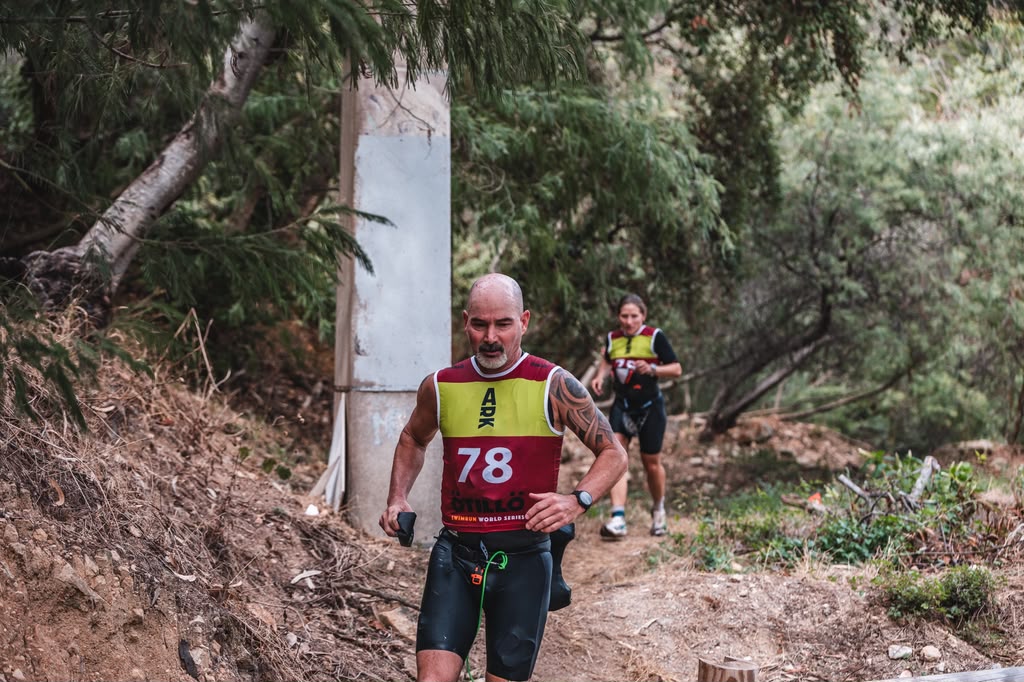
We pushed the roughly 2.5-kilometer, or 1.55-mile, descent back toward the Mediterranean, dropping about 100 meters, or 328 feet, and eventually reached another tunnel.
This time, no belly crawling required.
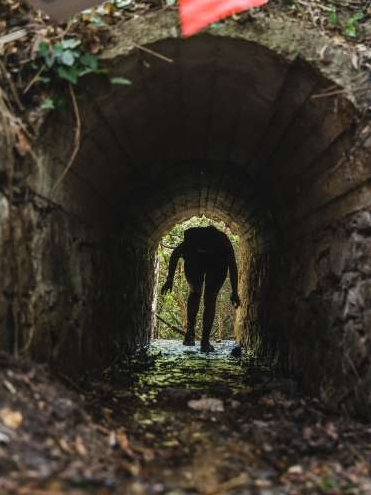
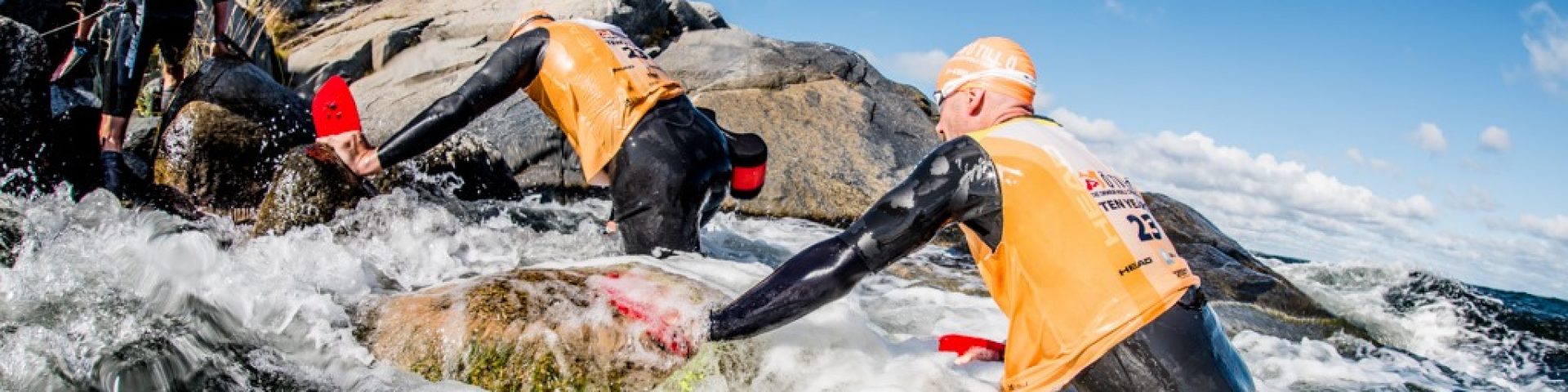
By then the Mediterranean had gone from choppy to angry. Whitecaps were forming and waves were crashing against the craggy rocks at the next swim entrance. As we scrambled on the rocks past a volunteer at the swim entrance, he yelled over the noise of the waves, “Don’t dive!”
Both of us heard, “Don’t die.”
Either seemed like solid advice.
We counted “un, deux, trois” and jumped.
From that point forward, the race became fun in a different way. We started chasing teams again. I would point at one ahead and Jen would nod. No discussion needed.
On one swim, both sides of my goggles filled with water until the palm trees I was sighting toward became blurry blobs. I just kept swimming until my paddles started hitting sea grass, which seemed like a reasonable indication that land was nearby.
On the next swim the goggles filled again. I tried to switch positions with Jen, but she wasn’t sure what I was doing and popped her head up.
“I can’t see shit. Take it.”
She put her face straight back in the water and went.
By then we had become a pretty damn good team.
As we headed toward the final swim, I told Jen I didn’t think there was anybody else we could catch, but I also didn’t want anyone catching us. Almost immediately, another mixed team appeared ahead on the rocks climbing down to the water.
So much for that.
The funny thing was that during our recon the afternoon before, we had debated whether we should connect the tether before scrambling across those rocks or wait until we were already in the water. Now we were running toward the same spot at full speed trying to chase another team down.
I handed the tether back to Jen while we were still running.
“Well, I guess that answers our question from yesterday.”
We hit the water hard, closed the gap and passed them with about 50 meters left before running onto the beach and through the finish.
Jen later described our day perfectly. The first third was about racing other teams, the middle third was about dealing with our own problems, and the final third was about racing again. That middle section was where the partnership mattered most. Between us there were low points, heat, a calf cramp, steep climbs and the usual collection of little issues that show up during a long race. We helped each other through them and kept moving. Then, when we both came back around, we got to race again.
For a partnership thrown together at the last minute, we worked incredibly well together. Jen raced with heart, communicated well and was always ready to work when things got hard or chase when we spotted another team ahead. It was a hell of a fun first race together.
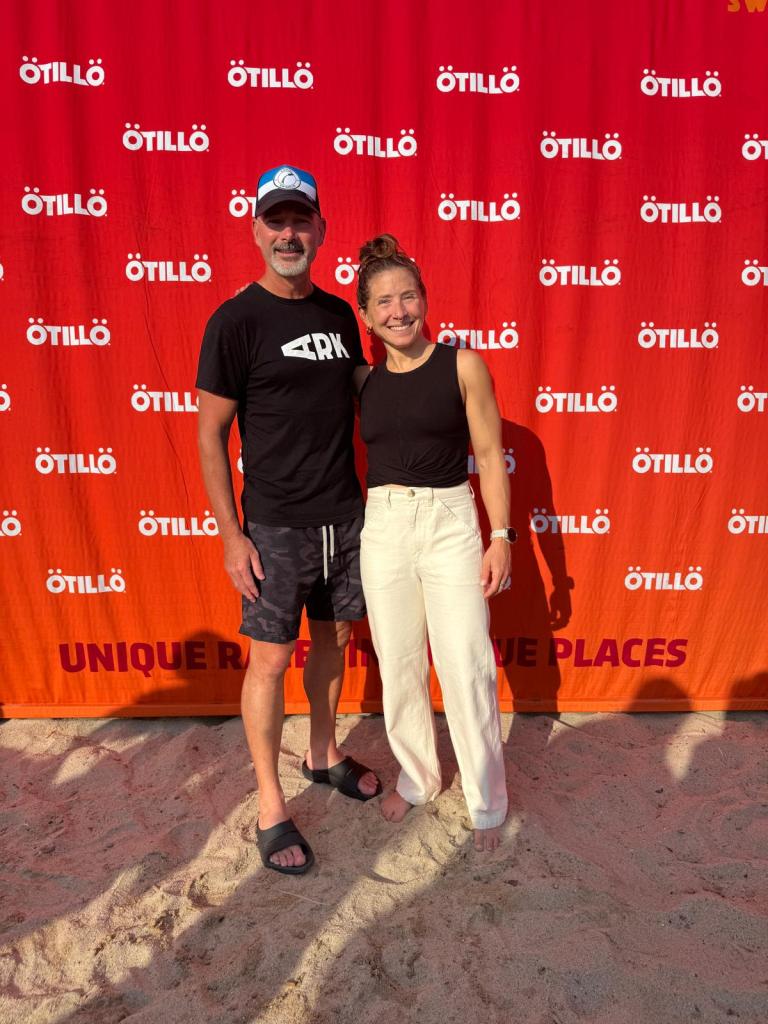
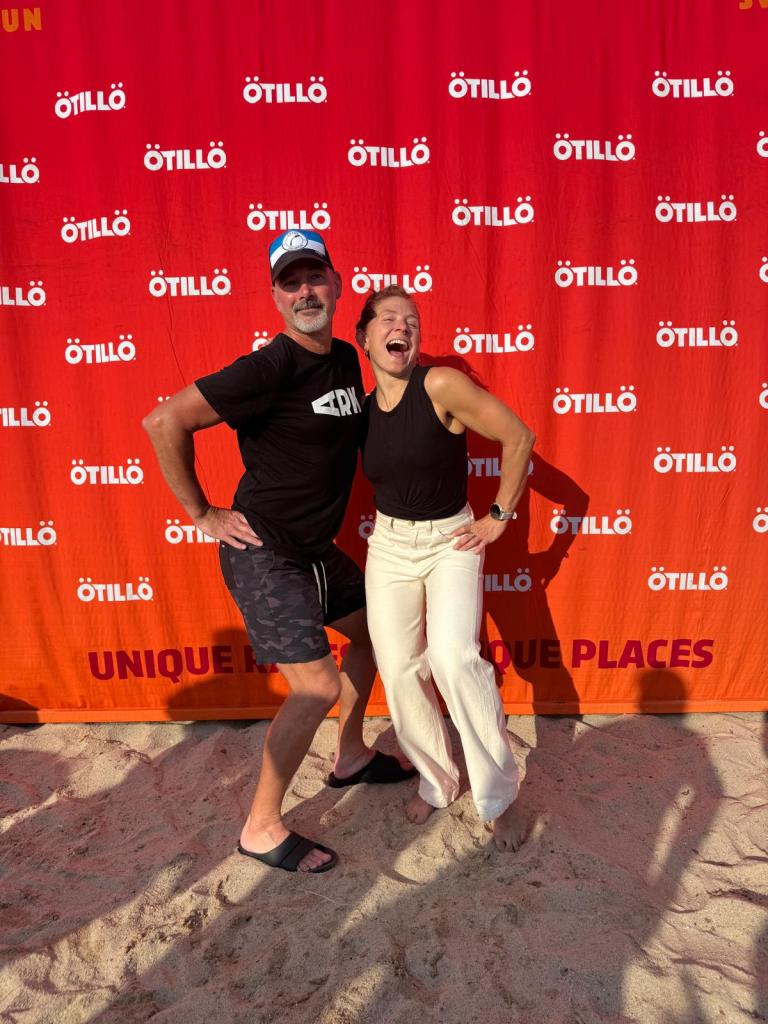
The first third was about racing other teams, the middle third was about dealing with our own problems, and the final third was about racing again.
Cannes itself surprised me just as much. I have always preferred technical swimrun courses, and I honestly didn’t know whether I would love a race where road shoes were the right choice.
It turns out I did.
The course just keeps changing. You start offshore on the Lérins Islands surrounded by centuries of history, swim back across the Mediterranean to Cannes, run beaches and marinas, dodge people through markets, climb stone stairways while church bells ring, grind up two significant climbs, belly crawl through a tunnel, slide through a ravine, enjoy the extravagant luxury of a second tunnel you can actually stand up in, and eventually jump into a whitecapping sea.
Every time you think you understand what kind of race Cannes is, it gives you something different.
ÖTILLÖ calls them “Unique Races in Unique Places.”
Jen and I came up with a slightly simpler description.
Ridiculously cool.
Race Stats
Race: ÖTILLÖ Cannes World Series
Division: Mixed Team
Partner: Jen Schnell
Result: 5th Elite Mixed Team
Goal: Finish the Elite Series strong, maximize points, and figure out how to race well together on very short notice
Race Gear & Nutrition
Wetsuit: ARK Vigg AIR
Paddles: ARK Carbon AIR Blades
Pull Buoy: ARK Keel+
Watch: Suunto Race S
Shoes: Saucony Endorphin Speed 5
Nutrition: GU Roctane Energy Gel
The Race S is Suunto’s smaller race-focused watch, the Speed 5 uses a nylon plate, and the ARK Vigg AIR, Carbon AIR Blades, and Keel+ are all current products in their respective lines. Suunto
Some of the products above are provided through brands that support my racing. Everything listed is gear I actually used during ÖTILLÖ Cannes.

