

Swimrun Is Cold Business — So Why Train in the Heat?
Most swimrun races across the globe take place in chilly climates, during chilly times of year, in seriously cold water. But here’s the twist, what if you’re training in the sweltering heat of summer?
I live in the southeastern United States, specifically Atlanta, Georgia. Let’s just say they don’t call it “Hotlanta” for nothing. To give you a picture, as I write this, the high is 91°F with a “Real Feel” of 99°F in the sun and 93°F in the shade. That’s 33°C, 37°C, and 34°C for my metric friends. Brutal, right?
Can you still train effectively for a cold-water swimrun in those kinds of conditions, and do it safely? The resounding answer is: YES. Not only can you, but you should. Here’s why.
Heat training: the benefits
It mimics altitude training: Hot weather stresses your body, and that’s actually a good thing (within reason). Heat stress boosts your blood plasma volume, which temporarily dilutes your red blood cell count. Your body responds by making more red blood cells, improving oxygen delivery and endurance.
It builds thermoregulation resilience: Many swimruns feature frigid swims followed by toasty runs, especially when you’re wearing a wetsuit in the sun. Training in heat helps your body regulate its core temperature better across those wild swings.
It builds grit: Let’s face it, running in 95°F heat can be miserable. But regularly suffering through tough conditions builds serious mental strength, the kind you’ll rely on during race-day lows when your brain tells you to quit.
5 tips for smart training
1. Hydrate like a pro
Hydration is more than just water. You need electrolytes, sodium, potassium, magnesium, for your muscles and nervous system to function. Drinking too much water without electrolytes can lead to hyponatremia, which is dangerous. I prefer to drink water and get my electrolytes from gels (but check the label, not all gels include them!). Always hydrate after workouts too.
2. Don’t obsess over pace
Your pace will drop in the heat, and that’s normal. Expect to slow down by 20–30 seconds per mile for every 5°F above your usual training temp. If you’re used to 9-minute miles, don’t be shocked to see 11:30s in 95°F weather. Trust the effort, not the watch. Consider switching to perceived effort (RPE) for pacing.
3. Ramp up gradually.
Heat exposure takes time to adapt to, just like building distance or elevation. Don’t jump into a 2-hour workout in high heat on Day 1. Build duration slowly and know the signs of heat exhaustion and heat stroke. It’s not weakness, it’s smart training.
4. Stay cold aware
While heat training has its perks, don’t ignore the cold. Use the coldest pool available for swims. Consider cold showers, ice baths, or cold plunges a few times a week to maintain your cold adaptation. Keep that edge for when race day hits and you’re diving into 55°F water.
5. Dress for the mission
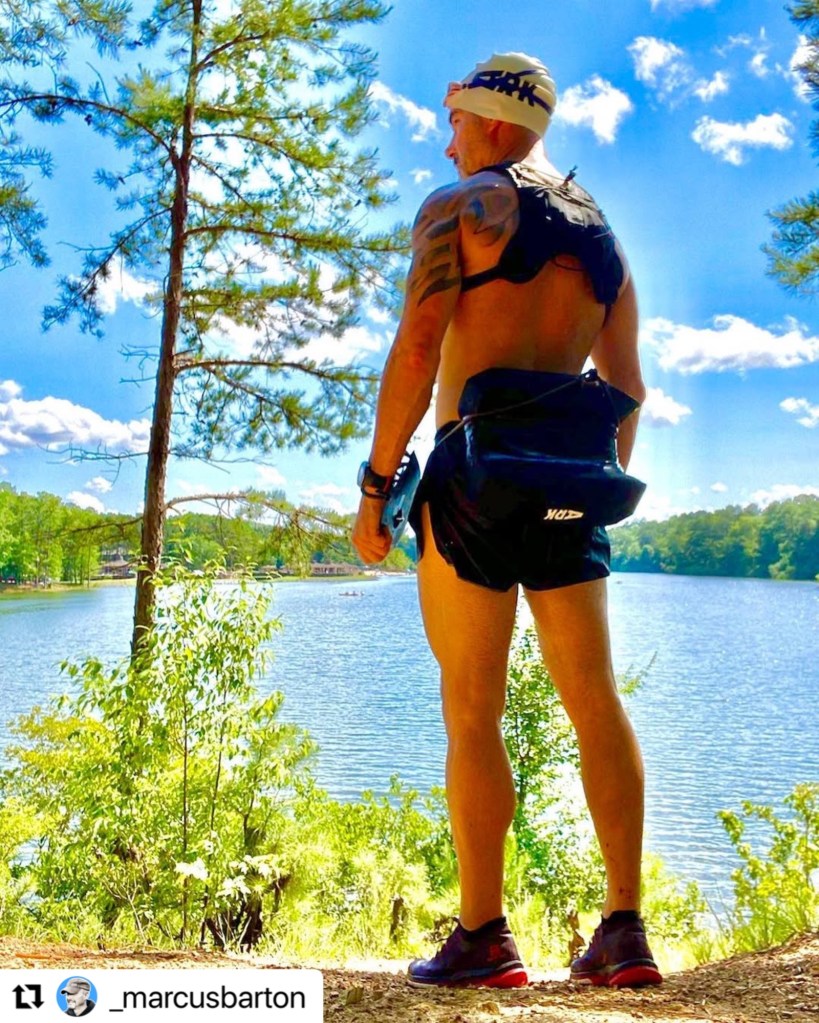
Go for light colors, breathable and wicking fabrics, and a good cap. I wear a wicking running cap to protect from the sun while keeping cool. I also train with a hydration pack, I’m a big fan of OrangeMud, and sometimes even wear it for summer swimrun sessions. No shame in staying prepared.
Training for cold swimruns in a hot summer isn’t just possible, it’s an advantage if you do it right. Heat builds fitness, mental toughness, and versatility. So embrace the sweat, respect the temps, and keep your eyes on the prize.
Want more swimrun tips and training hacks? Hit me up, let’s get you ready to crush your next race, cold or hot.
 Speedy Lizard